
For decades, American urban planning has centered on the automobile and the adult consumer, treating children as liabilities to be managed.
When a society designs its public spaces, it implicitly decides who belongs in them.
Credit: Cataleirxs, CC BY-SA 4.0, <https://creativecommons.org/licenses/by-sa/4.0>, via Wikimedia Commons
In contrast, European cities increasingly treat children and families as the baseline indicators of urban health. By intentionally weaving dedicated play zones, protected parenting infrastructure, and vehicular restrictions into the daily landscape, European nations have constructed a public ecosystem that fosters robust physical, mental, and social development.
This systemic commitment to family-inclusive urbanism does not merely make cities more pleasant; it functions as a highly effective upstream public health intervention. As the United States grapples with a steep youth mental health crisis and stubbornly high childhood obesity rates, the European model offers a clear blueprint. Transforming public spaces to prioritize children is a necessary shift to improve long-term medical and developmental outcomes.
Car-Free After-School Zones and Active Independence
One of the most profound structural differences in the daily rhythm of European children is the presence of restricted vehicle access around schools. Across the United Kingdom and continental Europe, the “School Streets” initiative temporarily closes roads outside school gates to motorized traffic during morning drop-off and afternoon pick-up hours.
In London, where over 350 School Streets have been implemented under municipal health and transport frameworks, the immediate results are striking. Data published by the Greater London Authority shows that restricting car access during these peak hours reduced localized nitrogen dioxide levels by up to 23%. Beyond lowering exposure to toxic air pollutants that stunt lung development, the removal of vehicular danger radically alters pediatric behavior.
When the threat of traffic is removed, the space outside the school transforms from a hazardous transit zone into a communal plaza. Children routinely walk, scoot, or cycle to school independently or in peer groups. This structural shift addresses a critical public health metric: daily physical activity.
According to global transport data analyzed by Transport for London, parents and children at these schools are significantly more likely to engage in active travel, integrating cardiovascular exercise naturally into their morning and afternoon routines. In terms of developmental psychology, this autonomy fosters a sense of self-efficacy and spatial competence in children, which acts as a protective buffer against childhood anxiety.
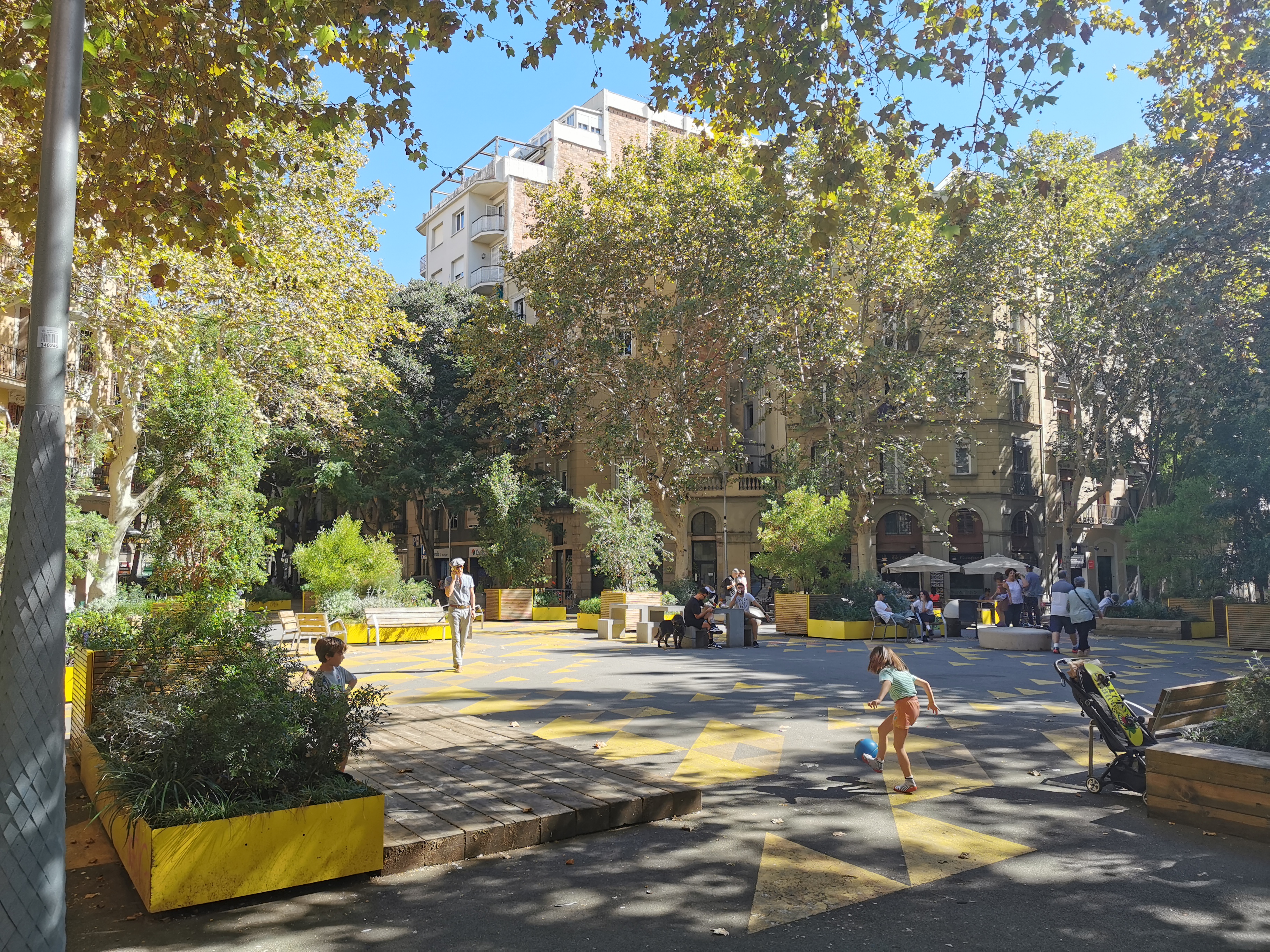
Similarly, Barcelona’s “Superblocks” (superilles) model restricts through-traffic to the perimeter of nine-block grids, reclaiming interior intersections as public squares. Studies tracked by the National Institutes of Health and the Barcelona Institute for Global Health reveal that this model significantly mitigates traffic noise and urban heat island effects while driving measurable increases in outdoor physical play and neighborhood social interaction.
Residents living within these zones report improved quality of sleep, heightened feelings of tranquility, and stronger ties to their local community, proving that pedestrianization actively lowers psychological stress.
Integrated Child Play and Dedicated Parenting Spaces in Retail
In American commercial architecture, children are most often not accounted for when designing spaces. Public restrooms contain lidless automatic flushing toilets at toddler height, nursing areas are relegated to unsanitary stalls, and play areas are often non-existent or reduced to a token plastic structure. European commercial planning, governed by stringent inclusivity guidelines, approaches consumer spaces through a multigenerational lens.
In modern European retail destinations, child play structures are treated as primary architectural features rather than afterthoughts. Specialized design firms like TouchWood Play and Reatek Europe work alongside urban architects to construct expansive, sustainable, and nature-inspired timber play areas inside shopping complexes. These are intentionally engineered landscapes featuring:
- Vertical climbing routes
- Sensory water and sand installations
- Imaginative role-play mini-villages
A prime example of this architectural approach can be seen in one of TouchWood Play’s bespoke retail installations:
These spaces are certified to rigorous European safety standards (EN 1176), ensuring that children encounter healthy, calculated physical risks that build motor skills and executive functioning without exposure to genuine hazards.
Crucially, these retail play zones are flanked by comfortable, integrated seating for parents and caretakers, transforming a stressful shopping chore into a communal social outing. This physical layout directly combats maternal and paternal isolation by giving parents a predictable space to interact with peers while their children play.
Furthermore, European infrastructure sets a high standard for infant care. Across the Nordic countries and Western Europe, public buildings and malls are equipped with “parenting sanctuaries” rather than simple nursing rooms. These spaces provide:
- Private, quiet cubicles with ergonomic nursing chairs
- Clean bottle-warming and food-preparation appliances
- Multiple unisex changing tables equipped with sinks and eco-friendly disposal systems
- Accessible family washrooms that allow a parent to supervise multiple children simultaneously
By normalizing and elevating the physical act of caring for an infant in public, these environments drastically reduce the postpartum anxiety and social withdrawal that many new parents experience. According to the foundational developmental frameworks established by the National Association for the Education of Young Children (NAEYC), when the built environment accommodates the biological and environmental realities of infancy and early childhood, parental mental health improves, which establishes a more secure, nurturing attachment style for the developing child.
The Public Health Dividends of Child-Centered Design
The systemic design choices observed across Europe yield clear, measurable dividends across three distinct public health domains:
Cognitive and Motor Skill Development
Unstructured play in structurally diverse environments stimulates neurogenesis and strengthens spatial awareness. The European approach to play spaces encourages sensory exploration and calculated risk-taking, which builds physical resilience. As documented in environmental psychology research on the benefits of open spaces tracked by the UNICEF Children’s Environmental Health Collaborative, children who learn to navigate these spaces develop a robust sense of autonomy, showing higher baseline confidence levels and lower rates of clinical anxiety as they mature.
Physical Health and Respiratory Wellness
By creating a physical buffer between vehicular traffic and pediatric environments, European cities directly protect the biological development of children. Chronic exposure to traffic pollution is a primary driver of pediatric asthma and cardiovascular vulnerabilities. Reclaiming school zones and neighborhood interiors establishes micro-climates of clean air. This protection allows children to exercise outdoors without inhaling dense concentrations of particulate matter, reducing emergency room visits for respiratory issues.
Mental Health and Social Connectivity
The isolation of modern parenting is a hidden driver of depressive disorders. When public spaces include wide pedestrian paths for strollers, private, dedicated rooms for nursing and diaper changes, and integrated play areas, they foster spontaneous human connection and a feeling of inclusion. Parents find informal support networks, while children engage in unstructured mixed-age play. This peer play is essential for developing emotional regulation, conflict resolution, and empathy.
A Public Health Imperative for America
The differences between European and American public spaces may ultimately be the result of policy choices and the prioritization of profits. The common American reality of car-dependent suburbs, strip malls lacking sidewalks, and public buildings devoid of dignified family infrastructure isolates parents and restricts children to sedentary, indoor lives. This spatial arrangement compromises public health, contributing directly to rising rates of pediatric depression, anxiety, developmental delays, and metabolic diseases.
The evidence from Europe demonstrates that designing public spaces around the needs of children improves health, mental wellness, and community resilience. For the United States, shifting toward family-inclusive urban design is a clear public health necessity.
Integrating interactive, child-friendly play infrastructure into our shared spaces delivers a compounding return on investment for public health and community resilience. Providing accessible sensory outlets accelerates gross motor skill development, lowers pediatric cortisol levels, and fosters early cognitive pathways tied to spatial awareness and emotional self-regulation. Ultimately, when an environment accommodates a child’s natural need for active play, it builds a healthier generation of citizens while simultaneously strengthening parental mental health, elevating community empathy, and establishing a sustainable foundation for lifelong societal well-being.
By redesigning cities to support families, the U.S. can build a healthier, more connected, and more resilient generation, and this shift can lead to lower healthcare costs for America over time.
Designing the Solution: Infrastructure as Intervention
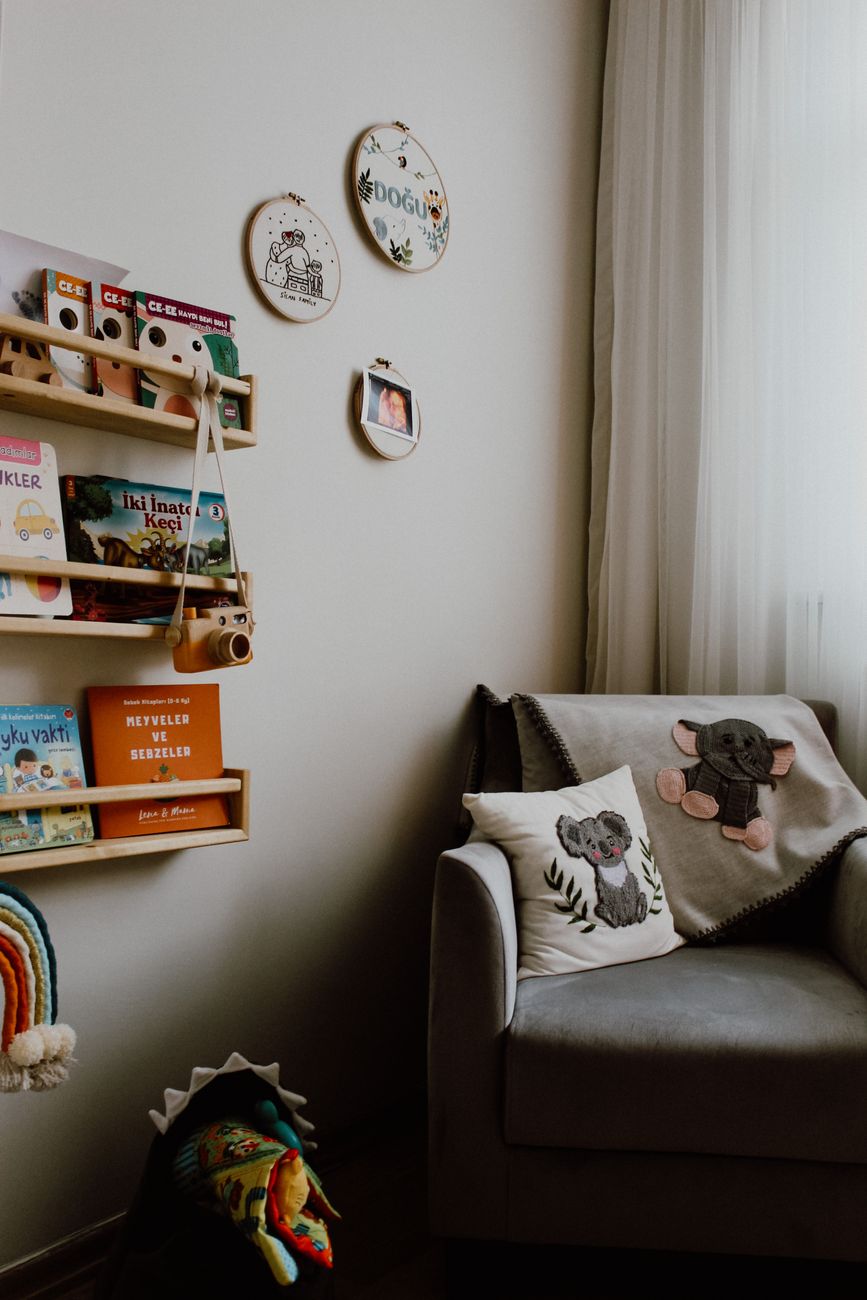
Incorporating family-centered infrastructure produces measurable benefits for both child development and parental well-being,
| Feature | Immediate Benefit to Children | Long-term Public Health Outcome |
| Integrated Sensory Pathways & Pocket Parks Mother’s Rooms | Provides a constructive, immediate outlet to release accumulated physical energy and lower nervous system overstimulation. | Reduces rates of childhood obesity and lowers the baseline risk of early-onset pediatric anxiety disorders. |
| Low-Level Restroom Sinks, Step Stools, Toilets & Handrails | Promotes independent, uninhibited environmental exploration and hands-on tactile learning. | Encourages healthy brain development and builds strong neurological pathways for creative problem-solving. |
| Child-Sized Utility Assets (e.g., Mini Grocery Carts) | Boosts a child’s confidence, self-reliance, and independent navigation of shared public spaces. | Cultivates deep civic engagement, social responsibility, and a strong sense of community belonging into adulthood. |
Low-Stimulus Sensory Quiet Rooms | Offers a calm, secure space to decompress from intense noise and bright visual triggers. | Lowers chronic childhood cortisol levels and prevents sensory overload for neurodivergent individuals. |
As built environment research in Higher Education Research & Development notes, the inclusion and active visibility of parenting facilities in shared public environments plays a vital role in the systemic normalization of parenting. When these spaces are intentionally designed, labeled, and integrated, they transform the built environment from a source of exclusion into an active partner in maternal and child well-being.
Partnership Opportunities

Partner with CYRUS
Collaborate on the Science of Spatial Equity in Public Health
At the Center for Youth, Research, and Unified Systems (CYRUS), we translate academic theory into measurable societal impact. We are always looking to partner with universities, public health researchers, policymakers, urban planners, and other professionals. We study how maternal-child health and development, existing systems, environmental design, and family-inclusive public infrastructure are connected to one another.
If you are looking to collaborate on research grants, publish joint case studies, or test structural interventions in real-world environments, we want to hear from you.
Partner with Cyrus Community Development
Bring the Solution to Your Neighborhood
Cyrus Community Development is the division of CYRUS that implements tangible solutions. We are always looking to partner directly with local nonprofits, family advocacy groups, and municipal centers to strengthen neighborhoods. We work hand-in-hand with local business owners to audit, design, and certify physical spaces that are genuinely welcoming to modern families.
Whether you are a nonprofit looking to co-host an initiative, a business ready to make your space family-inclusive, or a parent who cares deeply about our mission, we’d be happy to hear from you.
More Research & Impact


How We’re Helping Our Communities
Addressing Social Determinants of Health

Creating systems that unify communities and improve maternal-child outcomes.
Applied Public Health Research

Studying the built environment’s impact on maternal mental health and child development.
Community Directory for Families

Mapping Twin Cities local places with and without private nursing areas, changing tables, and other family-inclusive amenities.
Advocating for Environmental Justice

Reducing systemic disparities so all mothers can access dignified, hygienic spaces to breastfeed, regardless of race or income level.

 Cyrus Community Development
Leave a comment