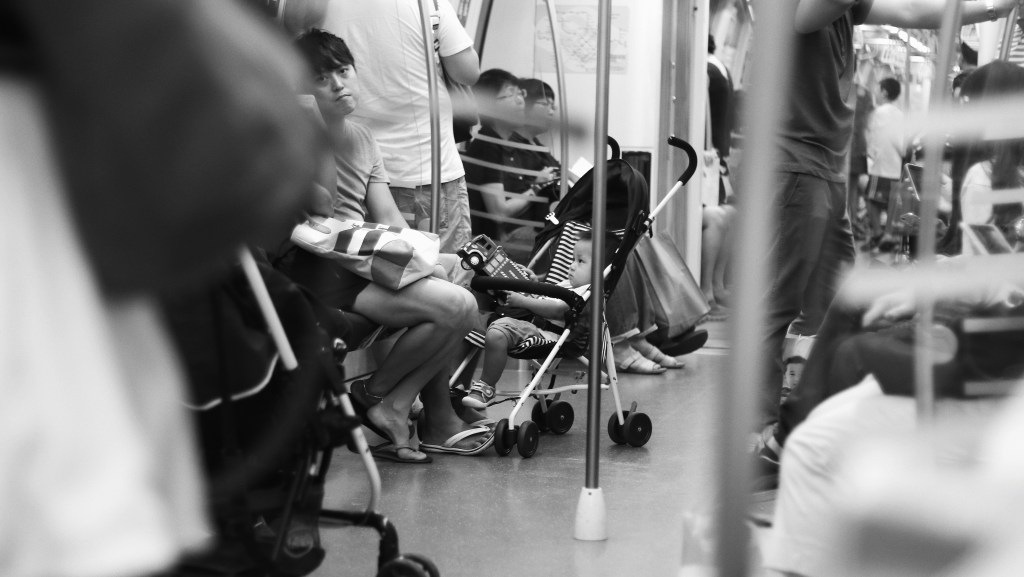
American urban planning and commercial real estate’s failure to integrate private, hygienic lactation infrastructure within public environments can be interpreted as a form of structural discrimination against women.
This article examines how the absence of infant-feeding infrastructure in community spaces disproportionately impacts low-income, minority, and transit-dependent maternal populations.

By analyzing public transit vulnerabilities, environmental stressors, and commercial spatial layouts, we demonstrate that structural barriers directly widen racial and socioeconomic gaps in infant nutrition and maternal health outcomes.
Finally, this article will evaluate a scalable, systemic solution: establishing private, hygienic nursing spaces within public commercial environments and community spaces as a civic norm.
Lack of Lactation Infrastructure as Structural Discrimination
Public health literature explicitly demonstrates that physical infrastructure shapes systemic health disparities. While clinical interventions historically focus on individual maternal behaviors or biomedical risks, modern ecosocial theory establishes that where a mother lives, commutes, and works dictates her capacity to sustain infant nutrition guidelines. The American Academy of Pediatrics (AAP) recommends exclusive breastfeeding for the first six months of an infant’s life, a benchmark that yields substantial protection against infectious diseases, metabolic disorders, and infant mortality.
However, achieving this benchmark requires reliable spatial and temporal conditions: specifically, access to private, clean, and physically accessible environments to nurse or express milk every two to three hours.
When urban communities, shopping districts, public transit corridors, and municipal buildings fail to provide accessible, non-bathroom lactation infrastructure, they enforce a spatial penalty on breastfeeding mothers. This deficit functions as a form of structural discrimination and spatial inequity.
The lack of private nursing areas in public spaces gives a lactating mother only three choices: vulnerable exposure, utilizing contaminated public restrooms, or isolating themselves at home. This indicates that the built environment actively undermines and disregards bodily autonomy and pediatric public health.
Spatial Equity and the Public Transit/Service Barrier
Spatial equity is defined by urban policy frameworks as the fair and just distribution of civic resources, services, and structural opportunities across geographic boundaries regardless of race, gender, or socioeconomic status. The current landscape of lactation infrastructure in the United States reflects profound spatial inequity, establishing what the National Institutes of Health (NIH) identifies as severe geographic and systemic barriers to healthcare access for nursing mothers.
While some mothers can mitigate the absence of public facilities by creating strategic workarounds like working from home or attending high-resource retail spaces with lactation amenities, vulnerable populations lack the ability to integrate these solutions. As documented in national studies by the University of Minnesota School of Public Health, low-income families and single mothers are systematically the least likely to have access to appropriate, private spatial infrastructure, leaving them disproportionately exposed to the logistical failures of the built environment.
The Commuter Burden for Low-Income Mothers
Mothers from lower socioeconomic backgrounds, low-resource neighborhoods, and minoritized racial groups are statistically less likely to have flexible work schedules or access to private transit. According to comprehensive transportation mobility indices compiled by the Urban Institute, low-income households spend an average of 24% of their total income on basic transportation, forcing a heavy reliance on public transit systems.
For a mother navigating a multi-stop commute using buses or trains, the logistical challenge of feeding an infant becomes nearly impossible. National data analyzed by the Federal Transit Administration (FTA) highlights that public transit systems are fundamentally failing to support pregnant women and caregivers, with over 50% of minoritized riders reporting missed or delayed essential trips due to systemic transit delays, poor sidewalk connectivity, and a complete lack of safe, clean public restrooms or private care spaces.
Environmental Justice and the Cumulative Impact on Minority and Low Income Mothers
Environmental justice demands that all communities, particularly marginalized populations, receive equal protection from environmental hazards and equal access to healthy, supportive built environments. Maternal health disparities and environmental injustice is stark: Black, Indigenous, and other People of Color (BIPOC) experience pregnancy-related mortality rates up to three to four times higher than white mothers, alongside disproportionate rates of severe maternal morbidity and preterm births.
Structural racism drives the segregation of low-income families into under-resourced urban environments characterized by high noise pollution, extreme heat island effects, and elevated exposures to localized toxins. Data sets featured by UChicago Medicine and the National Institutes of Health (NIH) establish that these systemic environmental stressors trigger chronic physiological weathering and elevated cortisol levels in mothers that live in these areas.
Furthermore, when a mother is exposed to these external environmental hazards without access to private lactation areas while in public spaces, her body’s milk ejection reflex is physically impeded. Stress and anxiety inhibit the release of oxytocin, the hormone responsible for milk let-down. This reinforces the physiological toll of environmental injustice, widening the health equity gap in infant nutrition.
The Solution: Integrated Nursing Spaces as an American Standard
To mitigate the harmful effects to mothers and infants caused by lack of sanity, private lactation infrastructure, public policy, municipal zoning, and commercial real estate must pivot to integrate nursing spaces as a new standard.
National workplace studies from the University of Minnesota School of Public Health prove the direct, causal relationship between dedicated physical space and successful health outcomes: mothers who have access to private, clean, non-bathroom spaces to express milk are more than twice as likely to sustain exclusive breastfeeding for the recommended six months compared to mothers without.
Extending this blueprint from the private workplace into public transit hubs, municipal complexes, and retail centers ensures that low-income and transit-dependent mothers receive the same structural support as women in higher socioeconomic classes.
Conclusion: A Unified Blueprint for Urban Health Equity
The structural isolation of low-income, minority, and transit-dependent mothers within the contemporary American built environment is a clear violation of spatial equity and environmental justice. As established throughout this analysis, the absence of clean, private, and secure lactation infrastructure within public transit nodes, civic centers, and commercial properties acts as a structural choke point that actively undermines pediatric nutrition, accelerates maternal stress, and compounds deep-seated racial health disparities. Individual educational campaigns cannot fix a problem caused by an unsupportive physical environment.
Resolving this crisis requires a complete paradigm shift: treating lactation spaces not as optional real estate add-ons, but as mandatory public infrastructure as essential as clean drinking water or accessible walkways.
By deploying scalable, structurally sound models like those created by Cyrus Community Development, the public and private sectors can co-invest in solutions that dismantle environmental racism, guarantee spatial equity, and build a resilient, health-congruent world where maternal dignity and child wellness are permanently embedded in the built environment.

Designing the Solution: Infrastructure as Intervention
Cyrus Community Development actively bridges the gap between public health theory and physical implementation by designing and deploying high-impact solutions.
| Feature | Immediate Benefit to Children | Long-term Public Health Outcome |
| Integrated Sensory Pathways & Pocket Parks Mother’s Rooms | Provides a constructive, immediate outlet to release accumulated physical energy and lower nervous system overstimulation. | Reduces rates of childhood obesity and lowers the baseline risk of early-onset pediatric anxiety disorders. |
| Low-Level Restroom Sinks, Step Stools, Toilets & Handrails | Promotes independent, uninhibited environmental exploration and hands-on tactile learning. | Encourages healthy brain development and builds strong neurological pathways for creative problem-solving. |
| Child-Sized Utility Assets (e.g., Mini Grocery Carts) | Boosts a child’s confidence, self-reliance, and independent navigation of shared public spaces. | Cultivates deep civic engagement, social responsibility, and a strong sense of community belonging into adulthood. |
| Low-Stimulus Sensory Quiet Rooms | Offers a calm, secure space to decompress from intense noise and bright visual triggers. | Lowers chronic childhood cortisol levels and prevents sensory overload for neurodivergent individuals. |
As built environment research in Higher Education Research & Development notes, the inclusion and active visibility of parenting facilities in shared public environments plays a vital role in the systemic normalization of parenting. When these spaces are intentionally designed, labeled, and integrated, they transform the built environment from a source of exclusion into an active partner in maternal and child well-being.
Partnership Opportunities

Partner with CYRUS
Collaborate on the Science of Spatial Equity in Public Health
At the Center for Youth, Research, and Unified Systems (CYRUS), we translate academic theory into measurable societal impact. We are always looking to partner with universities, public health researchers, policymakers, urban planners, and other professionals. We study how maternal-child health and development, existing systems, environmental design, and family-inclusive public infrastructure are connected to one another.
If you are looking to collaborate on research grants, publish joint case studies, or test structural interventions in real-world environments, we want to hear from you.
Partner with Cyrus Community Development
Bring the Solution to Your Neighborhood
Cyrus Community Development is the division of CYRUS that implements tangible solutions. We are always looking to partner directly with local nonprofits, family advocacy groups, and municipal centers to strengthen neighborhoods. We work hand-in-hand with local business owners to audit, design, and certify physical spaces that are genuinely welcoming to modern families.
Whether you are a nonprofit looking to co-host an initiative, a business ready to make your space family-inclusive, or a parent who cares deeply about our mission, we’d be happy to hear from you.

More Research & Impact



How We’re Helping Our Communities
Addressing Social Determinants of Health

Creating systems that unify communities and improve maternal-child outcomes.
Applied Public Health Research

Studying the built environment’s impact on maternal mental health and child development.
Community Directory for Families

Mapping Twin Cities local places with and without private nursing areas, changing tables, and other family-inclusive amenities.
Advocating for Environmental Justice

Reducing systemic disparities so all mothers can access dignified, hygienic spaces to breastfeed, regardless of race or income level.

 Cyrus Community Development
Leave a comment